
One Small Cap A Day: BSET
Bassett Furniture

Today’s small cap is BSET, Bassett Furniture:
INVESTMENT ANGLE
Bassett is an unprofitable, century-old, debt-light furniture manufacturer trading around book value after a bad acquisition and subsequent write down (the purchase of Noa Home in 2022). Management has trumpeted the custom-order retail model and the potential for improving margins as a credible turnaround story. But the business remains exposed to housing turnover, consumer discretionary spending, and tariff-driven input costs, all of which have kept growth choppy over the past 3 years. The tariffs in particular have created uncertainty around sourcing and manufacturing footprint.
The stock pays a 4% dividend, trades a .6x EV/sales, close to historical avgs, not extended in either direction. It’s traded ~.4x turns cheap to ETD (Ethan Allen) for much of the past 10 years, which today trades at 1.05x EV/sales. My view is that both are fairly valued, not much to do here.
WHAT IT DOES
Bassett Furniture Industries is a Virginia-based manufacturer and retailer of home furnishings, operating continuously since 1902. The company designs, builds, and sells custom-order and in-stock furniture including sofas, sectionals, dining sets, bedroom furniture, and home office pieces, sold through a network of company-owned and licensed Bassett Home Furnishings stores, an independent dealer network called Bassett Design Center (BDC), and e-commerce channels.
In Q4 of 2022, BSET acquired Noa Home, a mid-priced e-commerce furniture retailer headquartered in Montreal (first red flag). In 2Q of 2024, BSET made the decision to liquidate Noa, and took a $2.4M non-cash goodwill impairment on long-lived assets of Noa. They’ve aggressively written down inventory and intangibles over the past 3 years, so you can feel OK about their LIFO valuation allowance and the overall health of the asset side of the balance sheet.
HOW IT MAKES MONEY
Bassett operates through two main segments: Wholesale (manufacturing and distributing furniture to its own retail stores, licensed dealers, and independent BDC accounts) and Retail (company-owned stores selling directly to consumers). Roughly ~60% of wholesale revenue flows through corporate and licensed Bassett stores, with another 18% or so coming from the BDC network of ~100 independent accounts across about 150 locations. The retail model emphasizes made-to-order custom furniture with in-home design consultations and delivery typically within 30 days, a differentiator versus pure inventory-based competitors.
Inventory management wise, BSET runs a LIFO-valued, made-to-order upholstery with long production lead times and discloses backlog for that reason. Much of OCF for the past 3 years has been working capital release. They seem to be judicious with DPO/DSO even with the Noa closure. So management has some talent at anticipating demand and using the Wholesale channel to gauge demand on the Retail side.
FINANCIALS
Revenue has been roughly flat to modestly growing after the company exited its Noa Home e-commerce subsidiary in late 2024, which had been a drag. Wholesale revenue was a low single-digit grower over the past 36 months even controlling for the Noa acquisition.
Gross margins are closer to Ethan Allen than a pure furniture retailer (40-60%) as BSET is more vertically integrated than a generic retailer. So you get everything (margins, cash conversion cycle, WC management) well within a reasonable range for a vertically integrated furniture manufacturer. This has held steady for the past 3 years. I’d give the company a solid B+ management-wise, excluding the Noa acquisition. With the Noa acquistion its probably a C.
RECENT CATALYSTS
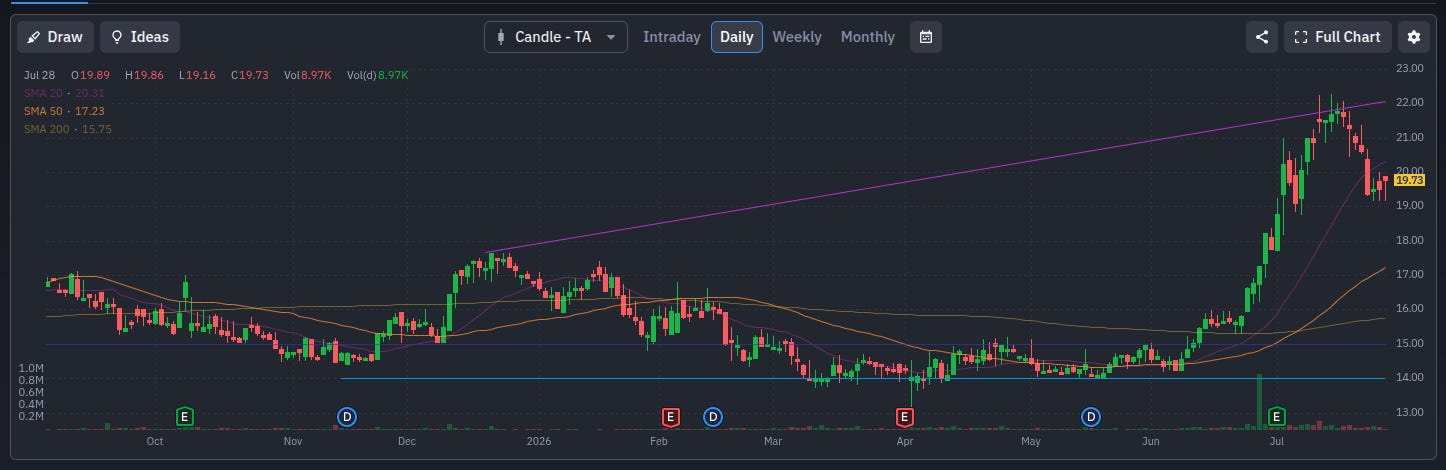
The company just received partial tariff refunds and expects retail gross margins to improve 200-250 basis points starting in mid-July, with most benefit landing in Q4. This got the stock rallying, particularly subsequent to the index exclusion event. BSET was also kicked out of Russell indexes in June, which didn’t do much to stop the stock from rallying into the tariff refund catalyst.
Management is pursuing a cost-reduction plan targeting $1.5-2.0 million in annual SG&A savings, weighted toward the back half of 2026. E-commerce Is also a growth vector; written web sales were up 40% with average ticket size up 24%, and a Memorial Day promotional event drove a 14% increase in written sales. Store footprint continues to grow in midsize MSAs: capex of ~$10-12 million (up from $4.5 million last year) is being used to to fund new store openings in Cincinnati and Orlando plus a new High Point showroom.